Sourcing Guide
OEM vs ODM Packaging: Which Manufacturing Model Is Right for Your Brand?
April 2026 8 min read By ChromaPack Engineering Team
Learn how we support both models with our customization services — from standard OEM to full ODM development.
1. OEM vs. ODM: The Core Differences at a Glance
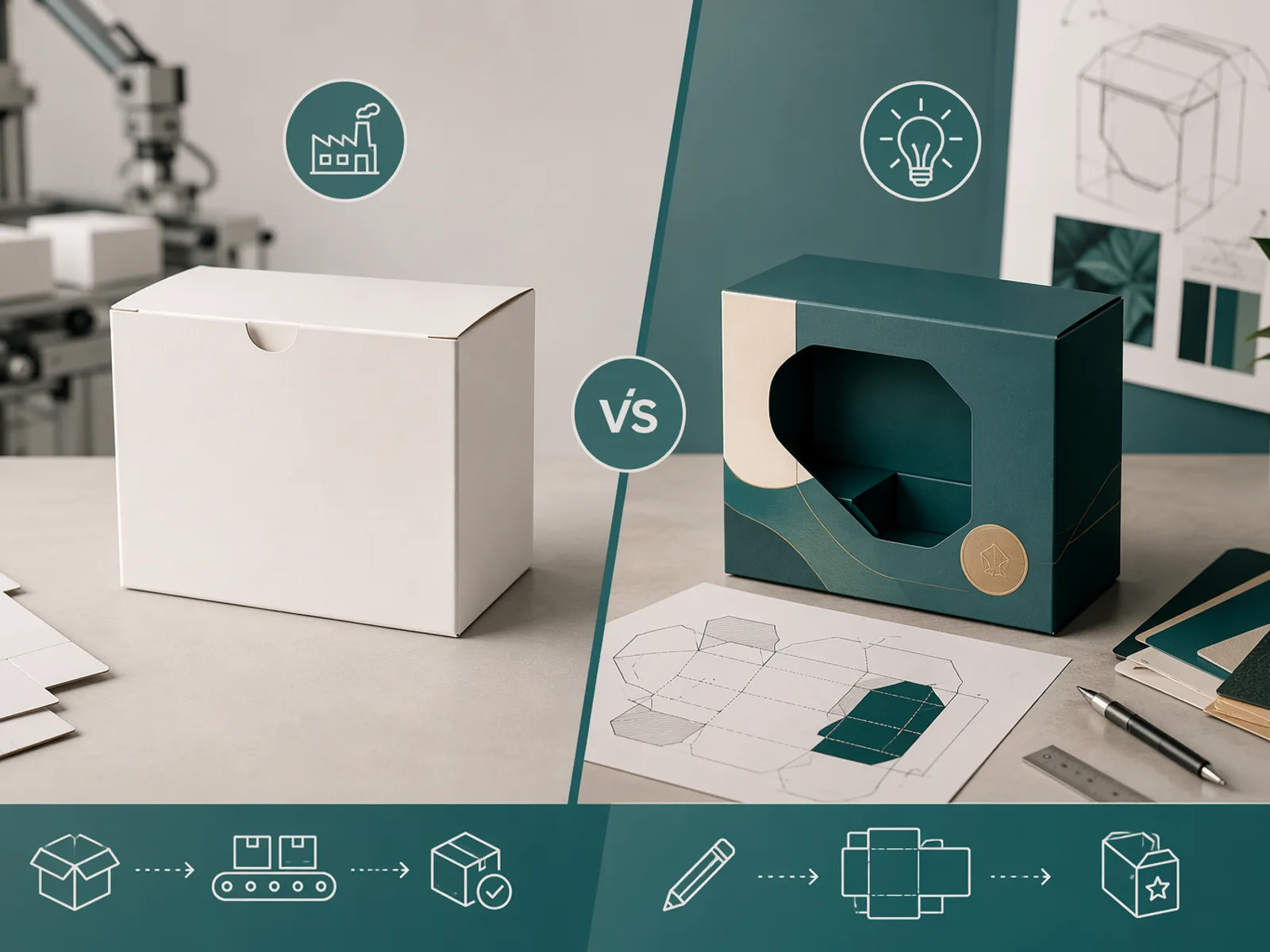
For quick reference, here is how the two models compare across five key procurement metrics:
| Metric | OEM (Custom Specification) | ODM (Factory Standard + Branding) |
|---|---|---|
| Design Ownership | Buyer provides technical drawings | Factory provides existing structures |
| Customization | Unlimited (Shape, Size, Material) | Limited to Graphics and Finishes |
| Tooling Cost | High (Custom molds/dies required) | Low to Zero (Using existing dies) |
| Lead Time | 10–14 weeks (including prototyping) | 6–8 weeks |
| Ideal For | Established brands with strict CI | Startups, Private Labels, Rapid testing |
2. When Should You Choose OEM Packaging?
OEM is the "Built from Scratch" model. You are not just buying a box; you are creating a proprietary asset. Choose OEM if:
-
Unique Structural Needs: Your product has a non-standard shape (e.g., a hexagonal telescope box or an asymmetrical magnetic closure) that requires custom engineering.
-
Established Brand Identity: Your brand manual dictates specific paper weights, textures, and dimensions that off-the-shelf solutions cannot meet.
-
Large Scale / Long Term: You are willing to pay the initial Tooling Fee (approx. $150–$300) because the unit price at high volumes (5,000+ units) will eventually be lower.
Example: A luxury perfume brand requiring a velvet-lined rigid box with a custom-molded plastic insert to hold a specific bottle shape.
3. When Should You Choose ODM Packaging?
ODM is often referred to as Private Label Packaging. The factory has already done the structural R&D; you simply apply your "skin." Choose ODM if:
-
Speed is Priority: You need to launch a product in 2 months and cannot afford 3 weeks of back-and-forth on structural prototypes.
-
Lower Initial Budget: You want to avoid custom die-cutting fees and mold costs.
-
Market Testing: You are launching a new SKU and want to test the market with a low MOQ (typically 500 units) using a standard box size.
Example: A skincare startup using a standard 10×10×5cm Lid and Base box, but adding premium Rose Gold foil and custom matte lamination to make it feel high-end.
4. The "Hybrid" Model: The Secret to Cost-Effective Branding
In real-world procurement, most savvy brands use a Hybrid Strategy: Structural ODM + Graphic OEM. Instead of reinventing the box shape (which is expensive and slow), you choose a factory-standard structure (ODM) but customize every square inch of the visual surface (OEM Printing).
The benefit: you get a 100% custom-branded look without the mold fee or the technical drawing phase. At ChromaPack, 70% of our mid-market clients use this model to achieve a "Luxury" feel on a "Startup" budget.
5. How ChromaPack Supports Both Models
Whether you have a finished CAD file or just a logo and a vision, our Shenzhen facility handles both OEM and ODM customization paths:
-
For OEM: We provide DFM (Design for Manufacturing) feedback within 48 hours to ensure your custom structure is stable for international shipping.
-
For ODM: Access our library of 200+ proven box die-lines. Drop in your artwork and we go straight to sampling.
-
Shared benefit: All orders include 24-hour quoting, full material traceability, and sample costs deductible against the bulk order.
Also see: Custom Gift Box Pricing Guide: MOQ, Finishes & Lead Times →
Frequently Asked Questions
-
**Is OEM always more expensive than ODM?**Not necessarily in terms of unit price. While OEM has higher upfront tooling costs ($150–$300 for a standard die), the per-unit cost at 10,000+ units is often identical to ODM.
-
**Can I put my logo on an ODM box?**Yes. That is the definition of Private Labeling. You use the factory's structure but the printing is 100% yours.
-
**Which is better for eco-friendly packaging?**Both can be eco-friendly. At ChromaPack, we offer FSC-certified paper and soy-based inks for both OEM and ODM projects.
-
**How much are the tooling fees for OEM?**For a standard rigid box with a custom size, expect $150–$300 for the die-cutting mold. This is a one-time fee, and it is recouped quickly at volume.
Ready to Start Your Packaging Project? Send us your product details and get a tailored quotation with MOQ, lead time, and pricing.
Send Product Details Get a Quote