
Sourcing Guide
Aluminum Foil vs. Metallized PET vs. EVOH Pouches: The Ultimate Barrier Comparison
September 2026 | 15 min read | By ChromaPack Engineering Team
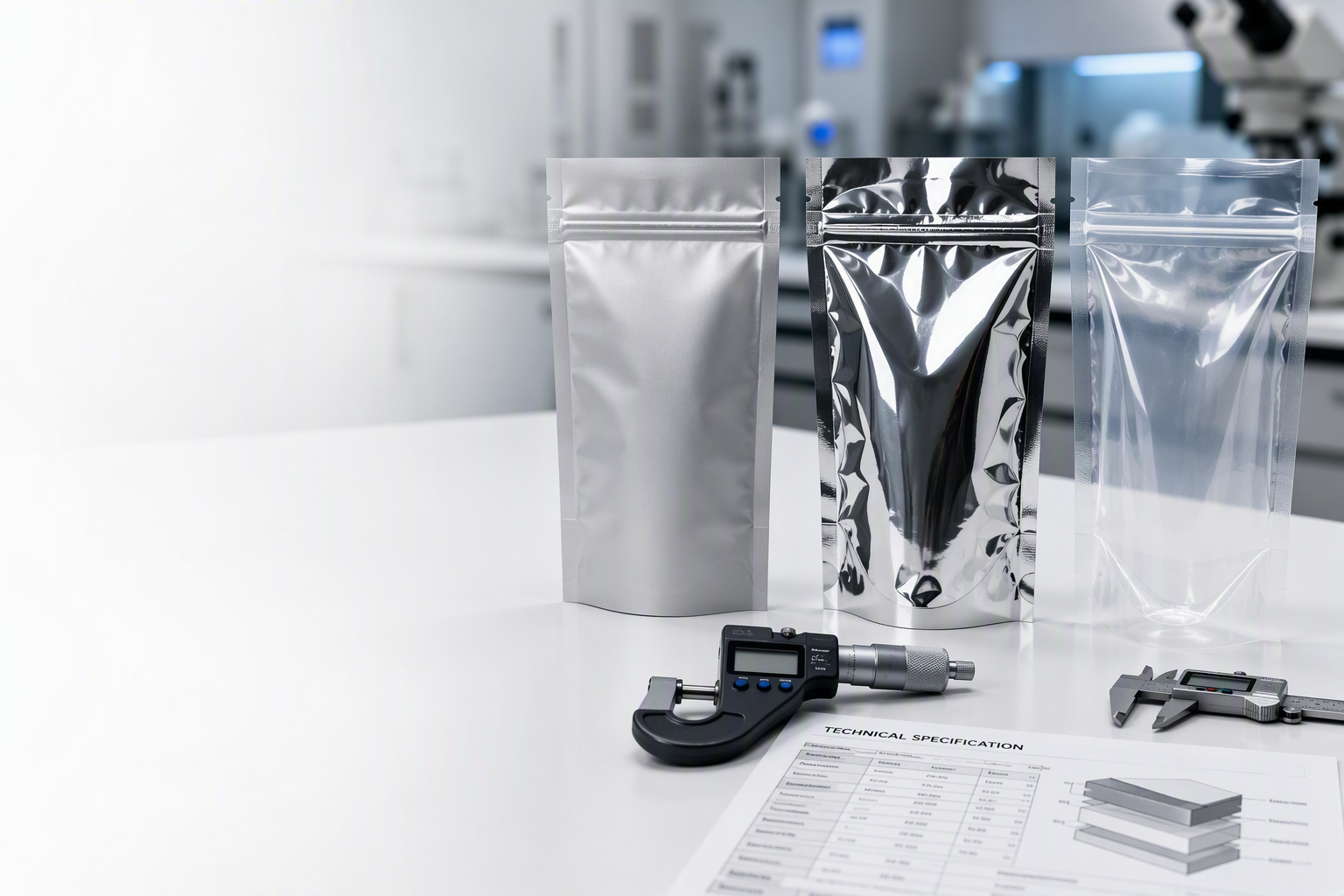
Choosing between aluminum foil, metallized PET (VMPET), and EVOH is critical for product shelf life and brand positioning. Before making a technical decision, we recommend you explore our standard and custom packaging products to understand the baseline formats available for each route.
1. Defining the Three Barrier Routes
A flexible pouch is a multi-layer system. For a fair comparison, you must identify which layer performs the barrier role within the complete laminate.
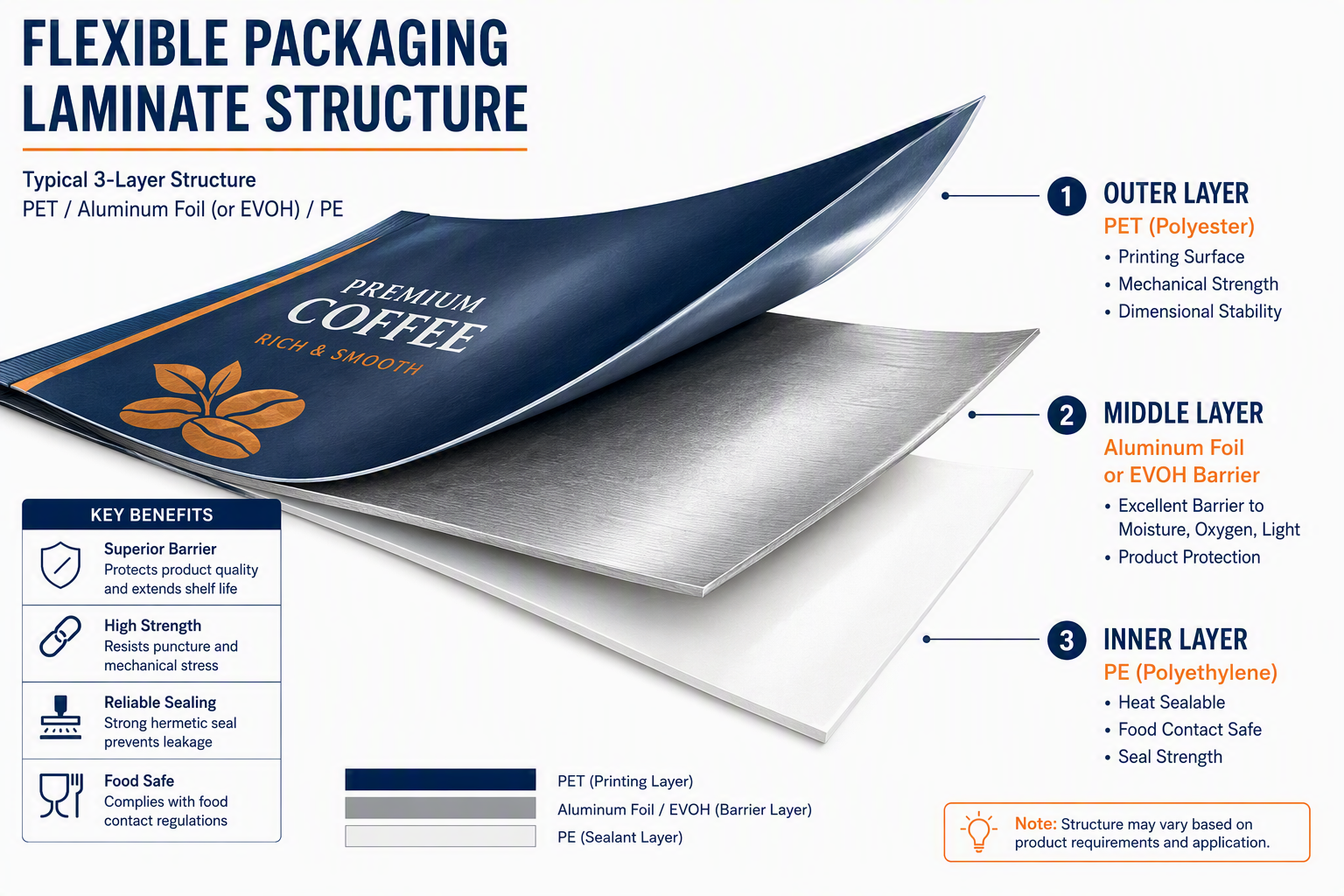
Aluminum Foil (AL)
A real layer of aluminum foil laminated between polymers. It is the gold standard for high-sensitivity products.
- Best for: Roasted coffee, medical-grade items, and high-aroma ingredients.
- Pros: 100% light-proof; zero oxygen and moisture transmission when intact.
- Cons: Non-transparent; prone to flex-cracking; non-recyclable in standard streams.
Metallized PET (VMPET)
PET film with a vacuum-deposited aluminum coating. It balances performance and cost. Learn more about the finishes available in our customization guide.
- Best for: Snacks, protein powders, and mass-market retail goods.
- Pros: Excellent silver aesthetics; much lower cost than foil; better flex-crack resistance.
EVOH (Ethylene Vinyl Alcohol)
A high-barrier copolymer layer used within a coextruded or laminated structure.
- Best for: Transparent food pouches and mono-material recyclable designs.
- Pros: Crystal clear; metal-free; compatible with specialized recycling programs.
2. Decision Matrix: Choosing Your Structure
Use this procurement framework to identify the right candidate for your product.
| Performance Factor | Aluminum Foil | Metallized PET | EVOH Layer | | :--- | :--- | :--- | :--- | | Oxygen Barrier | Extreme | High | High (Grade Dependent) | | Moisture Barrier| Extreme | Strong | Medium (Structure Dependent) | | Light Protection | 100% Opaque | Partial / Reflective | Transparent | | Metal Detection | No | No | Yes | | Flex Resistance | Low | High | High | | Cost | Highest | Medium | Medium to High |
3. Product Failure Mode Alignment
Match your packaging to your product's most critical sensitivity point.
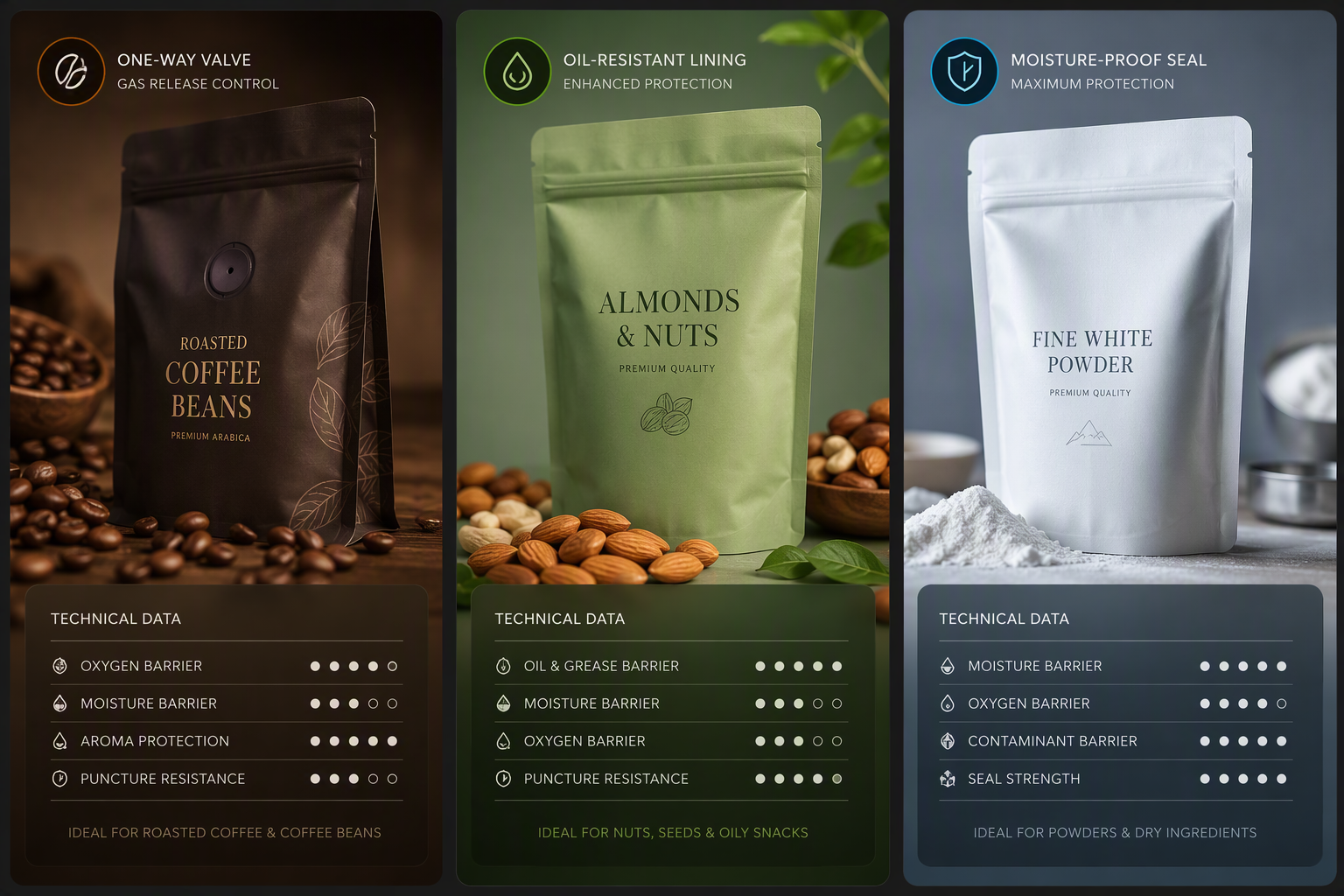
Roasted Coffee
- Priority: Aroma preservation and CO2 management.
- Winner: Aluminum Foil or High-Barrier VMPET. Compare options in our Coffee Packaging section.
Sensitive Powders
- Priority: Moisture exclusion and anti-caking.
- Winner: Aluminum Foil or EVOH (if transparency is required).
4. Total Cost of Ownership (TCO)
Procurement teams should look beyond the price-per-pouch. A high-barrier structure often pays for itself by reducing product returns and extending market reach. If you need a detailed cost breakdown, Discuss Your Project with our Engineers.
Technical Validation Checklist
Before approving a production run, ensure the following evidence is provided:
Confirmed layer composition, thickness (microns), and adhesive chemistry.
Laboratory transmission rates tested at 23°C/50%RH and 38°C/90%RH.
Pre- and post-Gelbo flex OTR results to ensure barrier integrity during transit.
Ready to Review Your Barrier Requirements?
Whether you need the absolute protection of foil or a modern recyclable EVOH structure, our engineering team is here to help.
- Browse our Full Product Catalog
- Learn about Customization Techniques
- Request a Professional Factory Quote