
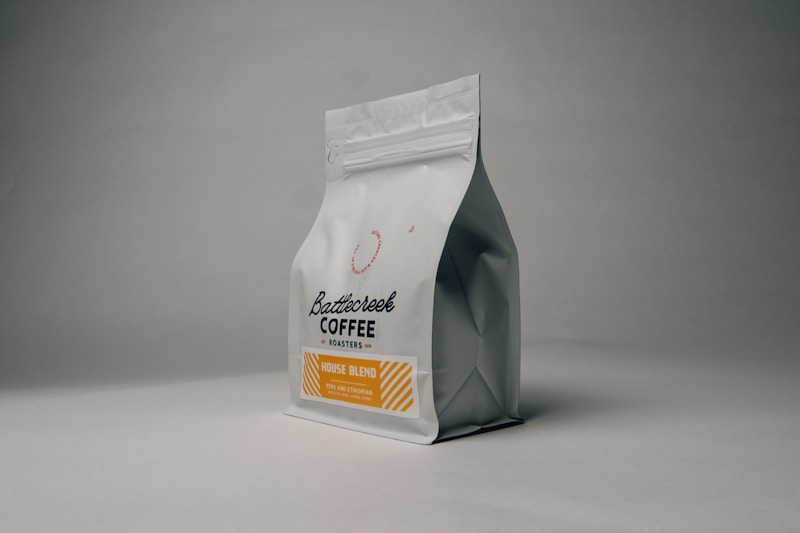
Coffee Packaging
How to Choose Coffee Bag Materials for Roasted Coffee Beans: Barrier, Valve and Shelf Life Guide
A comprehensive guide to coffee bag materials for different coffee types, covering barrier requirements, degassing valve selection, and material recommendations.
1. Why Coffee Bag Materials Matter
Coffee is one of the most sensitive consumable products when it comes to packaging. Exposure to oxygen, moisture, light, and heat accelerates staling. The right bag material directly determines shelf life, flavor preservation, and brand perception.
For roasted coffee beans, the key challenge is managing off-gassing while preventing oxygen ingress. Freshly roasted beans release CO2 for days after roasting. A one-way degassing valve is essential.
2. Key Barrier Properties
- Oxygen Transmission Rate (OTR): Prevents oxidation and staling. Target: less than 1 cc/m2/day.
- Moisture Vapor Transmission Rate (MVTR): Maintains bean moisture content. Target: less than 3 g/m2/day.
- Light Barrier: Prevents UV degradation. Use opaque or metalized layer.
- Aroma Barrier: Retains volatile flavor compounds. Use aluminum foil or EVOH layer.
3. Common Material Structures
For Roasted Whole Beans
- Kraft / PET / AL / PE: Classic 4-layer laminate. Kraft exterior for natural look, aluminum foil for 100% barrier, PE for heat seal.
- Matte PET / AL / PE: Premium retail look with soft-touch feel and excellent print quality.
- PET / EVOH / PE: Transparent high-barrier option for brands wanting product visibility.
For Ground Coffee
- PET / AL / PE: Standard high-barrier. Aluminum provides near-zero oxygen transmission.
- Kraft / AL / PE: Natural exterior with complete barrier protection.
For Instant Coffee
- PET / AL / CPP: Higher heat resistance required. CPP layer provides better seal integrity.
- PET / VMPET / PE: Metalized PET provides good barrier at lower cost than aluminum foil.
4. Degassing Valve Selection
- WIPF Valve (Switzerland): Gold standard. Consistent opening pressure at 3-5 mbar. Best for premium specialty roasters.
- Goglio Valve (Italy): Excellent alternative. Slightly lower cost, comparable performance.
- Generic Chinese Valve: Functional but wider pressure tolerance variance. Suitable for budget-conscious brands.
5. Closure Options
- Tin-Tie: Artisan and craft coffee brands. Low cost impact.
- Press-to-Close Zipper: Consumer convenience. Medium cost impact.
- Velcro / Hook-Loop: Premium specialty roasters. Medium-high cost impact.
- Resealable Slider: High-end retail bags. High cost impact.
6. Shelf Life Expectations
With proper materials and storage at 20-25 degrees Celsius, away from direct sunlight:
- Whole bean (valve + foil barrier): 12-18 months from roast date
- Ground coffee (foil barrier): 6-12 months
- Instant coffee (foil barrier): 12-24 months
7. Sourcing from China: Key Questions
- Can you provide OTR and MVTR test reports for the specific laminate structure?
- What valve brand do you use? Can you provide the valve specification sheet?
- Is the inner PE layer food-grade certified (FDA / EU 10/2011)?
- What is your minimum order quantity for custom-printed coffee bags?
- Do you offer flat-bottom, side-gusset, and stand-up pouch formats?
At ChromaPack, we use WIPF and Goglio degassing valves as standard. Our laminates are tested for OTR and MVTR compliance. We support MOQs starting from 500 pcs with sample turnaround in 3-5 working days.
Need a coffee bag solution tailored to your roast profile? Contact our engineering team for a free material recommendation and sample.