
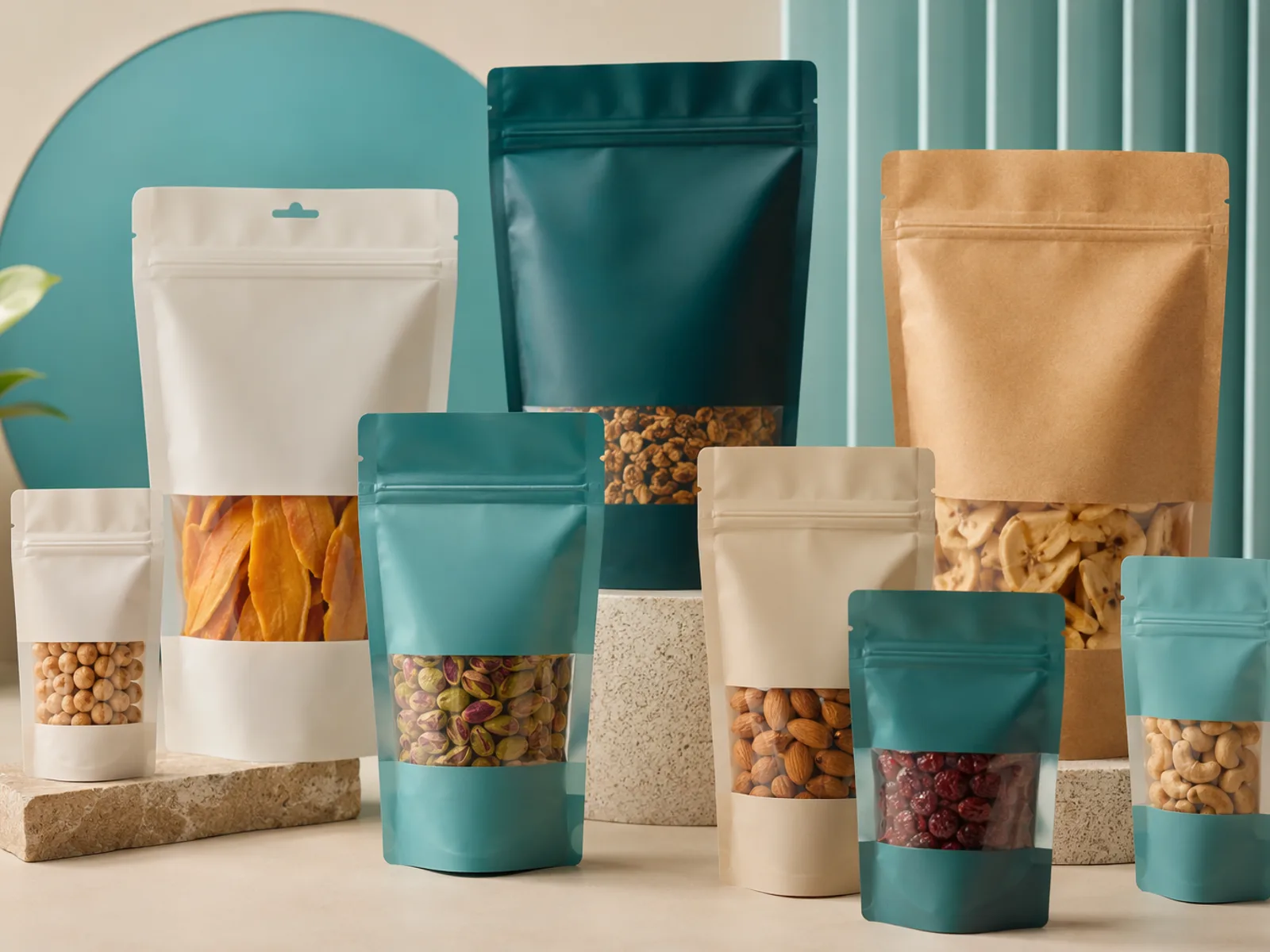
Food Packaging
Custom Flexible Food Pouches: Materials, Barrier Properties & Food-Safety Compliance
May 2026 9 min read By ChromaPack Food Safety Lab
Flexible packaging has revolutionized the food industry, offering lower shipping costs, reduced material waste, and superior shelf-life protection. However, choosing the right custom flexible food pouch requires a deep understanding of material science and food-safety regulations.
Whether you are launching a new organic snack line or packaging frozen superfoods, this guide covers the technical material structures and barrier properties needed to keep your products fresh and compliant.
1. Multilayer Material Structures
Most food pouches are not made of a single material. They are "laminates"—multiple layers of film bonded together to combine different strengths. A typical high-barrier pouch consists of three layers:
-
Outer Layer (Print Layer): Usually PET (Polyethylene Terephthalate) or BOPP. This layer provides the glossy or matte finish and holds the high-definition printing.
-
Middle Layer (Barrier Layer): The "engine room" of the pouch. Common materials include VMPET (metalized PET), AL (Aluminum Foil), or EVOH. This layer blocks oxygen, moisture, and light.
-
Inner Layer (Sealant Layer): Typically PE (Polyethylene) or CPP. This layer is food-contact safe and melts at a specific temperature to create a strong airtight seal.
2. Barrier Property Comparison
The "barrier" determines your product's shelf life. For example, nuts require a high moisture barrier to stay crunchy, while coffee needs a high oxygen barrier to prevent oxidation. See our Coffee Pouch Guide for specific valve and foil requirements.
| Barrier Type | Material Example | Best For... |
|---|---|---|
| High Moisture Barrier | VMPET / AL Foil / PE | Dry snacks, nuts, powder supplements, jerky. |
| High Oxygen Barrier | EVOH / AL Foil / Nylon | Fresh foods, oily snacks, coffee, organic products. |
| UV/Light Barrier | AL Foil / Black PE | Light-sensitive vitamins, essential oils, premium coffee. |
Expert Tip: For organic or "natural" brands, consider Recyclable Mono-Material PE or Compostable Kraft/PLA structures. While the barrier is slightly lower, they meet the growing consumer demand for sustainability.
3. Food-Safety Compliance (FDA & EU)
When sourcing from China, verifying food-contact compliance is the most critical step in Quality Control. All ChromaPack food pouches are manufactured in clean-room environments and meet the following standards:
-
FDA Compliance: All materials used are FDA-approved for direct food contact.
-
EU 10/2011: Compliance with European Union regulations for plastic materials intended to come into contact with food.
-
BPA-Free: We guarantee 100% BPA-free and Phthalate-free film structures.
-
Heavy Metal Testing: Regular testing to ensure compliance with CONEG and REACH standards for ink and adhesives.
4. Application Recommendation Chart
Choosing the pouch structure depends on your product's specific needs (e.g., grease resistance, freezer-safe, puncture resistance).
| Product Type | Recommended Structure | Key Pouch Features |
|---|---|---|
| Snacks & Chips | BOPP/VMPET/PE | Matte finish, tear notches, hang holes. |
| Granola / Grains | Kraft/VMPET/PE | Natural look, resealable zipper, clear window. |
| Liquid / Sauce | PET/Nylon/PE | Spouted pouch, high puncture resistance. |
| Frozen Food | PET/LLDPE (Freezer-grade) | Cold-crack resistance, heavy-duty seal. |
5. Sourcing Your Food Pouches
Sourcing custom food pouches involves navigating MOQ (Minimum Order Quantities) and plate costs for rotogravure printing. Check our Stand-Up Pouch Sourcing Guide for tips on minimizing costs and optimizing your order volume.
Ready to start? Visit our products page to browse our food-grade pouch options, including flat bottom bags, side gusseted bags, and stand-up pouches.
Launch Your Food Brand with Confidence
We provide free material consultations and food-safety certificates for every B2B order.