
Sourcing Guide
Folding Carton vs Rigid Box vs Corrugated Mailer: Which Structure Fits Your Product?
September 2026 | 17 min read | By ChromaPack Engineering Content
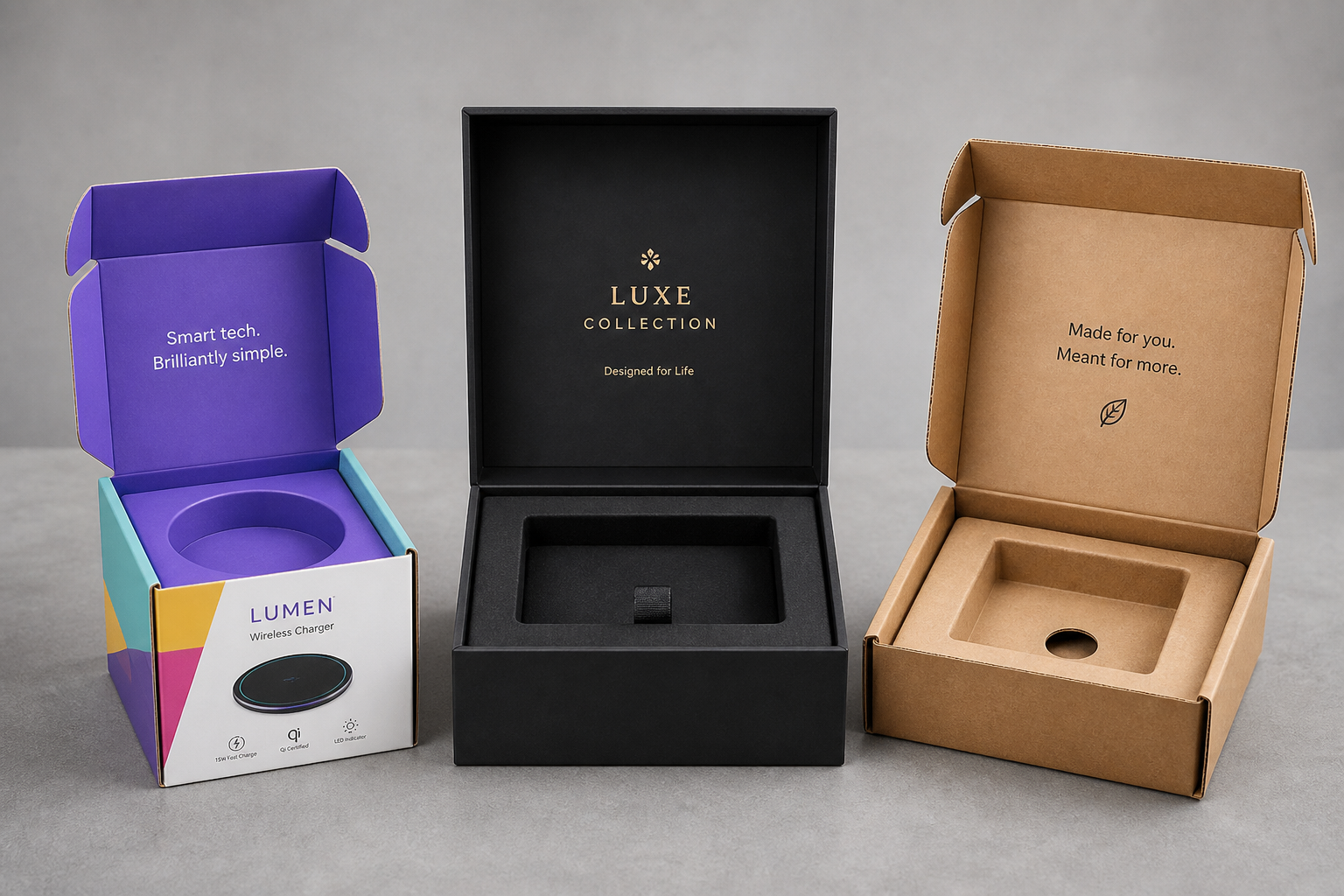
Short answer: In a folding carton vs rigid box vs mailer box decision, start with the package’s job. Use a folding carton for efficient retail presentation when the product and distribution system provide enough support; use a rigid box when premium presentation, fixed form and a structured reveal justify the extra material and assembly; use a corrugated mailer when the box is intended for fulfillment or delivery and the complete packed product can pass required route validation.
Compare the total packed system, not appearance or box unit price alone.
1. Define the Three Structures
The terms are often used loosely. Ask your supplier to identify the material construction, assembly state and intended role. A magnetic rigid box, a paperboard tuck carton and a roll-end corrugated mailer all create different operating and shipping systems.
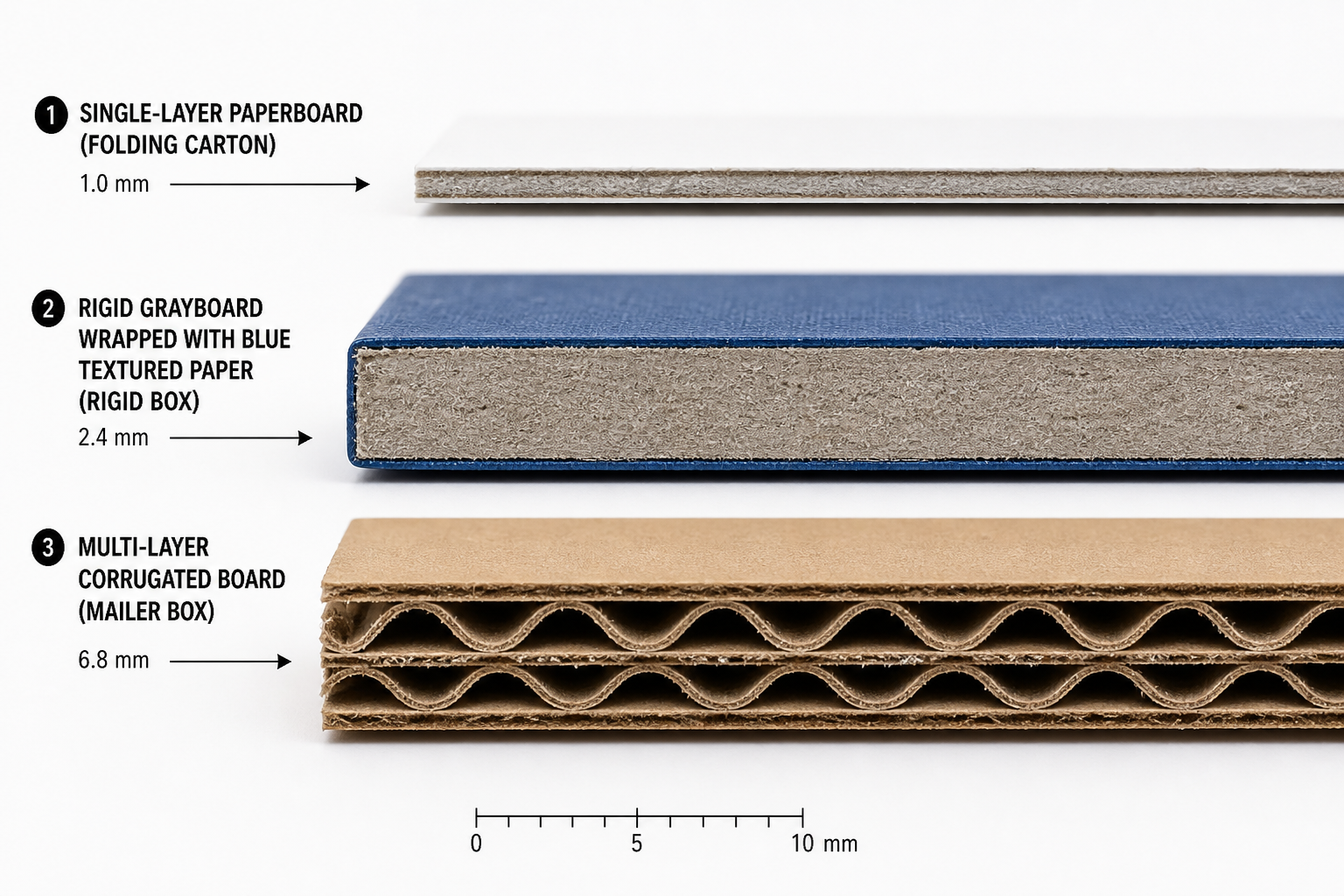
| Structure | Typical Construction | Common Role | | :--- | :--- | :--- | | Folding carton | Die-cut and scored paperboard, normally supplied flat or collapsed. | Retail shelf, secondary product pack, food or beauty outer carton. | | Rigid setup box | Rigid board wrapped with printed paper; maintains its finished form. | Premium gift, beauty launch, jewelry, electronics and presentation packs. | | Corrugated mailer | Die-cut corrugated board with fluted layers and self-locking features. | Ecommerce, subscription kits, branded fulfillment and ship-ready systems. |
Explore our current custom box structures before narrowing your project to a specific dieline and material.
2. Start with the Package Role and Sales Channel
The most important question is ‘What must this box do between the packing line and the customer?’ Forcing one structure across every channel can add material in one route while leaving another underprotected.
- Retail Shelf: Folding carton often starts the discussion. See our custom folding cartons for detail.
- Premium Presentation: Rigid box often starts here. Explore our custom rigid boxes.
- Direct Ecommerce: Corrugated mailer or shipper is usually the baseline. View custom corrugated mailer boxes.
3. Compare Product Risk before Choosing by Weight
Weight matters, but a light glass vial can be more vulnerable than a heavier textile product. Record the complete pack-out, dimensional range, center of gravity, fragile zones, surface sensitivity, and movement limits before comparing structures.
- Fragility: Which surfaces need cushioning or separation?
- Cosmetic Sensitivity: Which surfaces must not scuff or mark?
- Mass and Balance: How does the product load the base and wall?
Do not approve a structure from a product-category stereotype. Use a controlled measurement workflow and define what each structural sample must prove.
4. Packing, Storage, and Inbound Logistics
Empty packaging is part of the supply chain. Folding cartons and most mailers arrive flat, while rigid boxes usually occupy their finished volume. The buyer should compare space and labor together.
| Operations Field | Business Effect | | :--- | :--- | | Delivery State | Inbound freight, warehouse cube and receiving handling. | | Erection | Operator time, equipment needs and error opportunity. | | Insert Assembly | Labor cost, component counts and fit consistency. | | Master Packing | Outbound cube, compression and quantity control. |
5. Compare Total Packed Cost, not Generic Price Ranking
Build one cost boundary around a usable packed order delivered through your intended channel. A simplistic unit-price ranking often omits hidden operational costs.
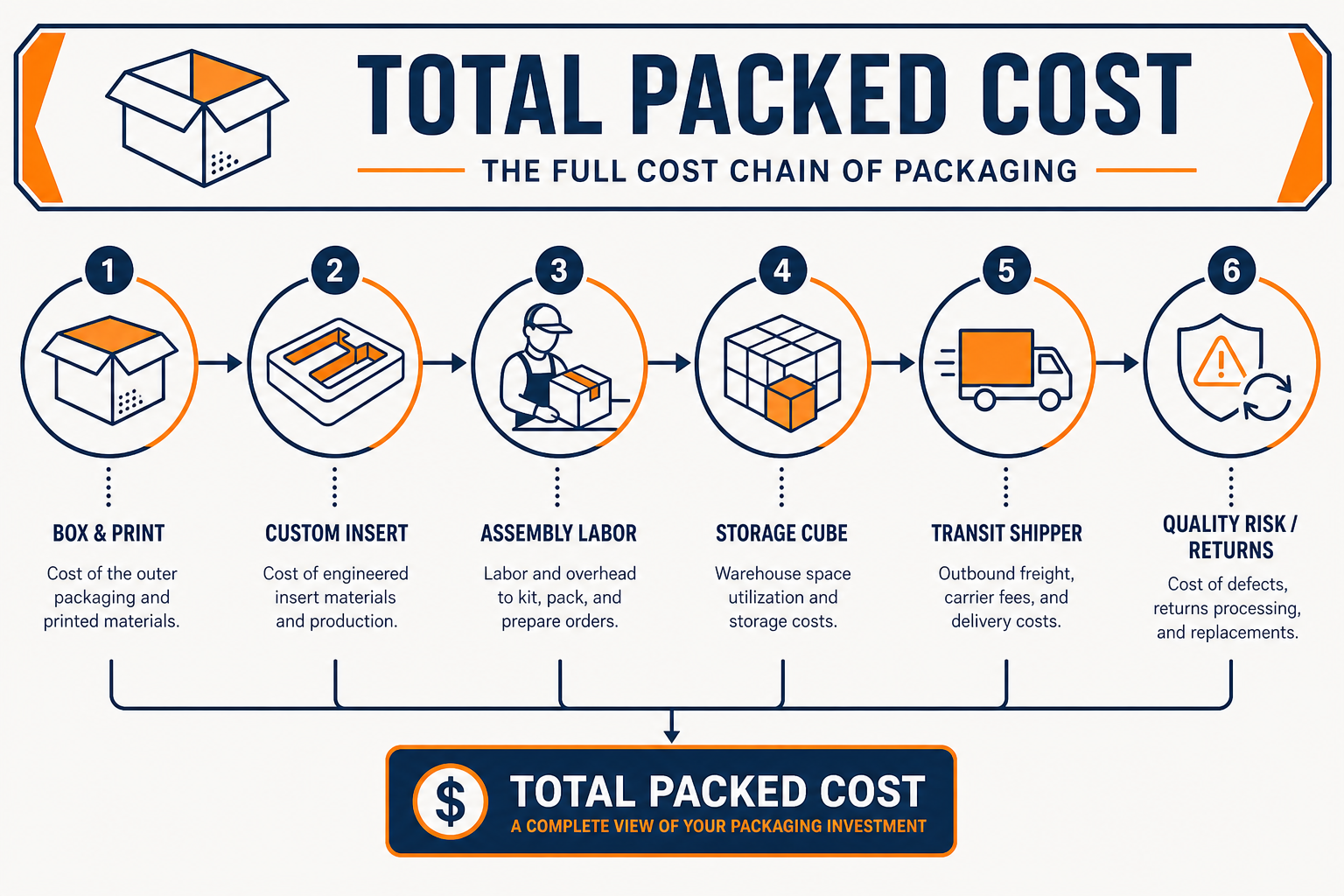
Total cost per usable packed order = Box and print + insert/accessories + tooling allocation + packing labor + inbound freight/storage + master carton layer + inspection/rework + expected damage cost.
6. Validate the Selected Structure as a Packaged System
A structural sample path ensures the fit is reliable before you commit to bulk production. These proofs are not interchangeable.
- Structural White Sample: Confirms dimensions, erection, closure and product fit.
- Printed Sample: Addresses appearance and graphic alignment.
- Representative Packed Sample: Evaluated for packing sequence, movement, scuff and distribution hazards.
Structural fit is one gate. Review our structural design and sampling capabilities to see how we coordinate project-specific validation.
Frequently Asked Questions
Is a rigid box always more protective than a folding carton? No. Rigid construction adds form, but protection depends on the product, insert, fit, and outer shipping system. Compare complete packed assemblies.
Can a folding carton be used for ecommerce shipping? It can be the sellable product pack, but it often needs a separate mailer. Use it as the final parcel only when validated for that exact route.
Which structure uses the least storage space? Flat folding cartons and corrugated mailers generally reduce empty-pack cube, but verify the labor time created by erection.
Ready to Choose Your Box Architecture?
To get an accurate recommendation, send the structure brief including:
- Product weight, dimensions, and complete contents.
- Target sales channel (Retail, DTC, Gift, etc.).
- Annual volume forecast and storage constraints.
- Required unboxing experience and sustainability goals.
Authoritative Sources
- FEFCO: Corrugated case-design code and testing methods.
- ISTA: Pre-shipment distribution testing and design tools.
- UPS: Dimensional weight and package sizing guides.