
How to Calculate the Landed Cost of Custom Packaging From China
August 2026 • 14–16 min read • By ChromaPack Engineering Team • Last reviewed: August 1, 2026
Short answer: the landed cost of custom packaging is every non-recoverable cost required to move an approved packaging order from the supplier to one precisely named receiving point, divided by the quantity your business can actually use. Start with goods and one-time setup, add export packing, origin charges, freight, insurance, import and destination costs, then adjust for defects, transit damage and unusable versions.
Core Formulas
Total Landed Cost
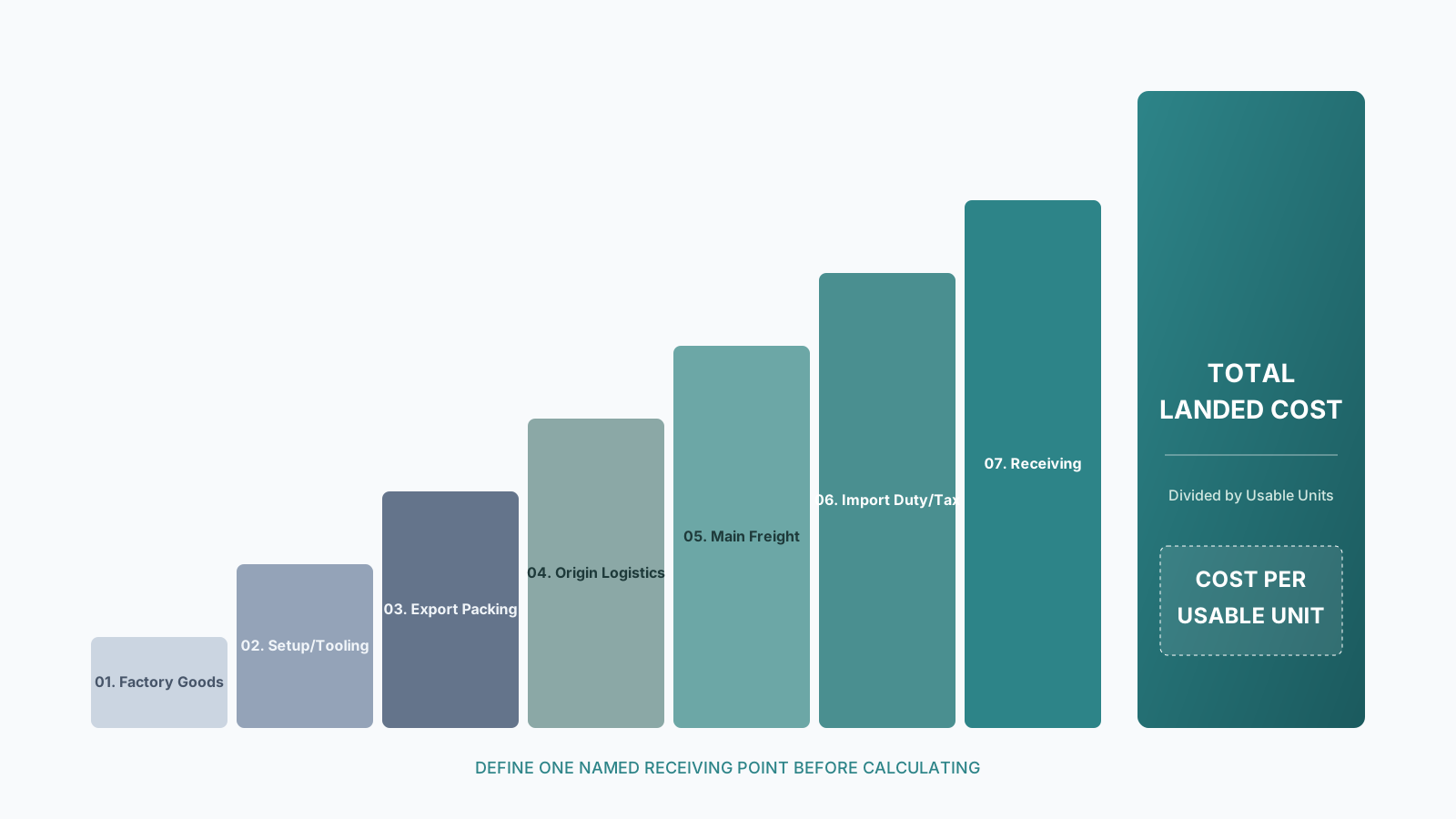
Goods + Setup + Packing + Origin + Freight + Import + Destination + Payment/Risk
Landed Cost per Usable Unit
Total Landed Cost ÷ (Units Received − Rejects − Transit Damage − Obsolescence)
What landed cost means for custom packaging
Landed cost is not a universal number printed by the supplier. It is a buyer-defined cost boundary. A U.S. brand may calculate cost to its third-party logistics warehouse. A European distributor may stop at its central distribution center. A group with its own China consolidation hub may first compare suppliers to the forwarder's warehouse and then calculate an additional consolidated-shipment cost.
The destination must therefore be written as a real place and point: a named terminal, forwarder warehouse, port, distribution center or receiving dock. “To the United States,” “door to door” or a three-letter Incoterms rule without a named place is too vague for cost control.
The definition also depends on accounting policy. Import VAT or GST may be recoverable for one buyer and a true expense for another. Inventory financing, internal labor and expected quality loss may be included in a management decision model but excluded from statutory inventory cost. Keep these lines visible so finance can decide how they are treated instead of silently deleting or double-counting them.
Use three denominators: Factory cost per ordered unit helps negotiate production. Landed cost per received unit helps logistics. Landed cost per usable unit helps pricing, margin and supplier selection. Do not use the same label for all three.
Step 1: Freeze the product and order assumptions
A cost model is only useful when every scenario describes the same package. Record the approved dimensions, material, thickness or GSM, print coverage, finishes, components, quality standard and quantity by SKU. If a cheaper option changes the laminate, board, insert or finish, treat it as a separate technical scenario rather than a lower price for the same product.
- Quantity: Ordered quantity by packaging SKU, size and artwork version; expected overrun/underrun and billable-quantity rule.
- Recurring Price: Recurring unit price and currency; below-MOQ, mixed-design or rush surcharges.
- Setups: One-time dieline, engineering, plates/cylinders, cutting die, foil/emboss tooling, color proof and sample costs.
- Compliance/Testing: Inspection, testing, certification/documentation and sample-courier costs that apply to the project.
- Packing: Export packing standard: units per inner/outer carton, protective materials, pallets, wrapping and labeling.
- Logistics Basis: Incoterms® rule, edition and exact named place/port; quote and freight validity; target ship and arrival dates.
- Delivery Boundary: Destination country, postal code, receiving type, appointment/liftgate/inside-delivery needs and warehouse restrictions.
Step 2: Require packing and shipment data
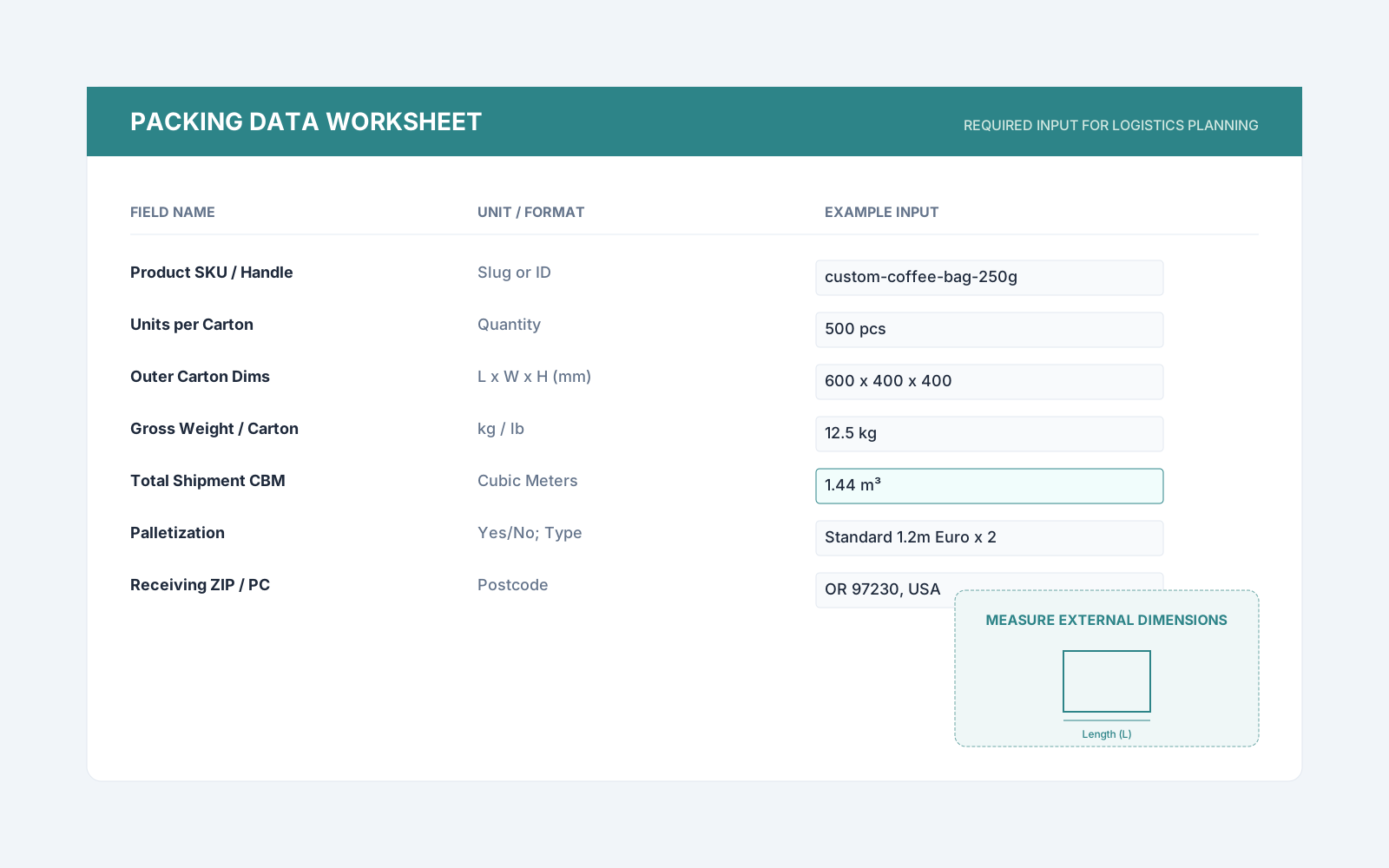
Packaging is often light relative to the space it occupies. A quote without carton dimensions, gross weight and total shipment volume cannot support a reliable freight estimate. Ask suppliers to return packing data with the commercial quote, then update it after the approved sample or packing trial if the structure changes.
Basic CBM Formula
If carton dimensions are in millimeters: Total CBM = Carton Length × Width × Height × Number of Cartons ÷ 1,000,000,000.
Use external packed dimensions, not the finished package dimensions. For air/courier volumetric weight, use the carrier's current divisor and rounding rule rather than assuming one global standard.
Step 3: Build the landed-cost model in cost layers
Build the model in the order the shipment moves. Mark every line as included, excluded, estimated or not yet confirmed. An unknown cost is not zero; it is an open assumption that should have an owner and a due date.
| Layer | Typical Lines | Primary Verifier |
|---|---|---|
| 1. Goods | Recurring unit price × quantity; SKU surcharges | Supplier Quote |
| 2. Development | Engineering, plates, dies, molds, samples | Supplier Quote |
| 3. Quality | Inspection, lab reports, validation, docs | Supplier/Lab |
| 4. Export Packing | Outer cartons, dividers, pallets, labels | Supplier Packing |
| 5. Origin & Export | Pickup, terminal handling, export clearance | Forwarder |
| 6. Main Carriage | Ocean/Air freight, surcharges, insurance | Forwarder/Carrier |
| 7. Import | Duty, Import Tax/VAT, Brokerage, Filing | Broker/Customs |
| 8. Destination | Terminal storage, drayage, warehouse dock | Warehouse |
| 9. Payment & Risk | Bank fees, financing, expected quality loss | Finance |
Some layers may already sit inside the supplier's EXW, FCA, FOB, DAP or DDP price. The model must separate scope without adding the same charge twice. State the Incoterms® edition and full named place, then ask the forwarder to start its quote exactly where the supplier's responsibility ends.
Step 4: Calculate duty and tax on the correct customs basis
Do not calculate import duty by multiplying the supplier's unit price by a rate found in a generic search result. The HS classification, product description, country of origin, destination country, transaction documents, customs valuation rules, trade measures and available preferences can change both the rate and the value to which it applies.
- Confirm the packaging HS code for the actual material and form.
- Confirm the country of origin and trade remedies.
- Ask what customs value base applies (Assists, royalties, freight inclusion).
- Separate customs duty from import VAT/GST.
- Ask finance whether VAT/GST is recoverable for your entity.
Step 5: Allocate shared freight and fees to the right SKU
A mixed shipment may contain pouches, folding cartons, rigid boxes, inserts and samples with very different value, weight and volume. Dividing every logistics charge by total units can make a bulky low-value box look artificially cheap and a compact pouch look expensive. Choose the allocation driver that best explains the cost.
| Allocation Method | Best Used For | Caution |
|---|---|---|
| Equal per unit | Same or very similar packages | Misleading when sizes differ |
| By gross weight | Weight-driven air or courier | Weak for bulky rigid boxes |
| By CBM / volume | Ocean freight & warehousing | Appropriate for empty packaging |
| By customs value | Duty or value-based fees | Not a proxy for freight space |
| By activity | Receiving, handling, storage | Needs warehouse activity data |
Step 6: Calculate cost per usable unit, not just ordered unit
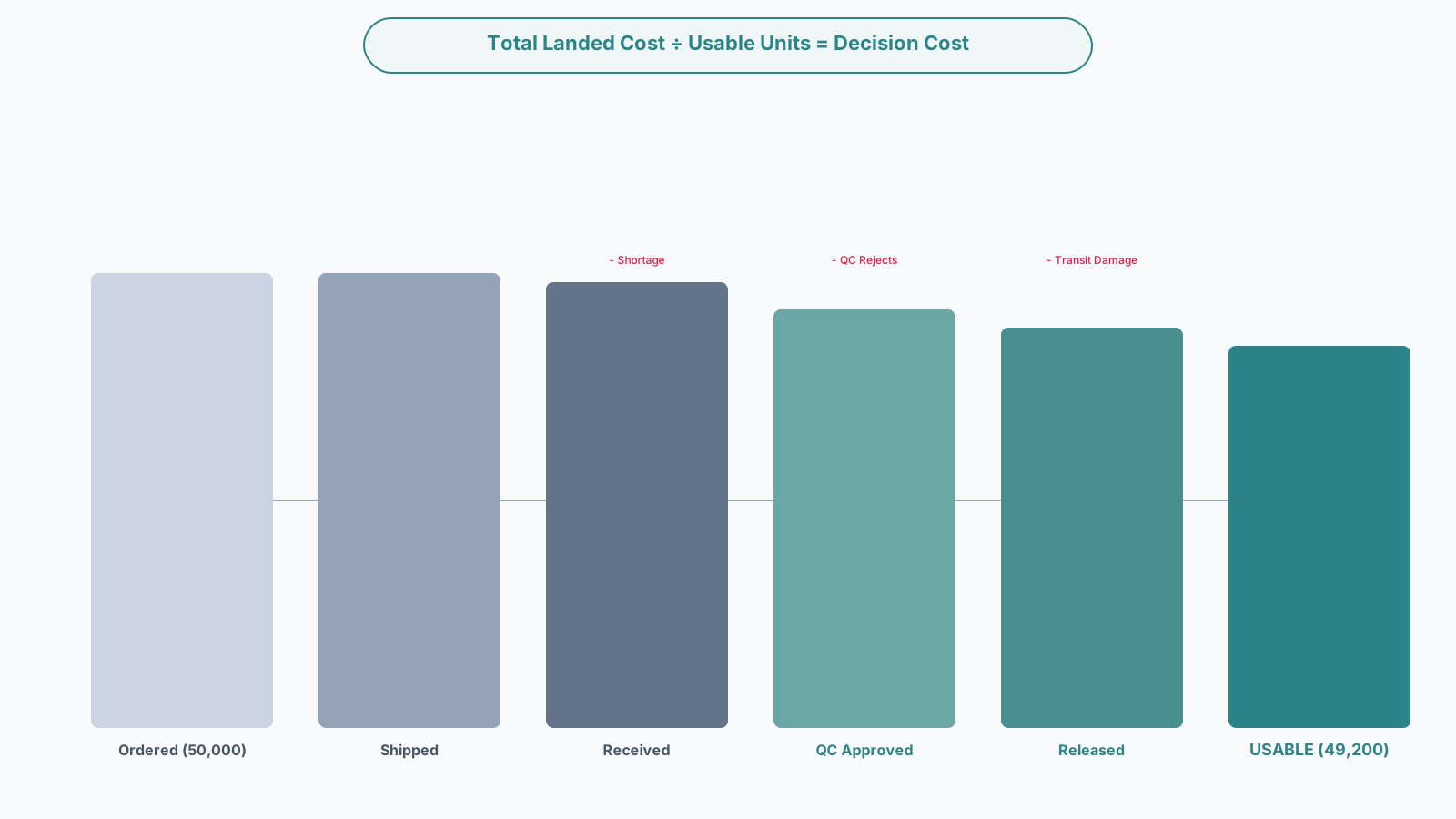
The units ordered, units shipped, units received and units released for use may differ. Custom production can have an agreed overrun or underrun. Transit can damage cartons. Inspection can reject print, dimensions, sealing, assembly or contamination defects. An artwork revision can make otherwise perfect packaging obsolete.
Usable-unit Example
If total landed cost is $12,150 and 50,000 units were ordered, the ordered-unit cost is $0.243. If only 49,200 units are usable, the decision cost is $12,150 ÷ 49,200 = $0.247 per usable unit. The difference is small at this loss rate, but it compounds across repeated orders.
Cost lines target buyers should not miss
| Target Buyer | Add these cost lines | Typical Blind Spot | |---|---|---| | Food & Coffee | Migration tests, valve/zipper trials, seal defects | Cheaper film may increase product loss | | Beauty & Luxury | Rigid-box volume, hand assembly, finish inspection | Cube rejects can outweigh price saving | | Distributors | MOQ per design, consolidation, split shipments | Equal per-unit allocation distorts margin | | Medical | Qualification, batch records, controlled materials | Full cost of release vs commercial samples |
Ten landed-cost mistakes that distort packaging decisions
- Using DDP price as final: Verify named place and exclusions first.
- Treating unknowns as zero: Use "Estimated" with an owner.
- Wrong duty base: Do not assume unit price × online rate is correct.
- Recoverable tax: Separate VAT/GST cash flow from inventory cost.
- Hidden tooling: Separate setup cash from amortized management cost.
- Dividing by ordered units: Use usable yield as the true denominator.
- Equal freight allocation: Use CBM or value-based rules where appropriate.
- Estimating without packing data: Require carton count and dimensions.
- Ignoring receiving: Liftgate, unloading and QC holds have costs.
- Static models: Update the model after final packing and freight booking.
Request a Quote With Packing Data → ChromaPack can review your specification and return an itemized factory quotation, preliminary packing data and clearly named delivery options for landed-cost planning.